Over 6,000 Security Service Applicants Test Positive for Drugs
More than 6,000 people who applied to join Ghana’s security services have tested positive for illicit drugs following mandatory drug screening introduced during this year’s recruitment process.
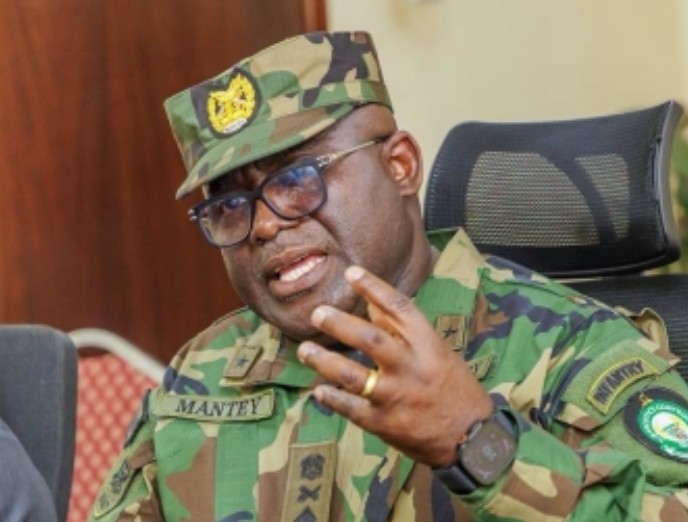
The Director-General of the Narcotics Control Commission, Brigadier General Maxwell Obuba Mantey, revealed that the affected applicants made up about seven percent of all candidates screened.
The applicants were seeking recruitment into the Ghana Police Service, Ghana Prisons Service, Ghana National Fire Service and Ghana Ambulance Service.
According to Brig. Gen. Mantey, the tests showed traces of substances including cannabis, cocaine, methamphetamine, opiates and tramadol.
He said the results were worrying and showed the need for stronger preventive measures to protect young people from substance abuse.
He questioned how the country could ensure national security if some of the people hoping to protect the public were already involved in drug use.
Brig. Gen. Mantey made the comments during the national commemoration of the International Day Against Drug Abuse and Illicit Trafficking, held in Accra on Friday, June 26.
The event was held under the theme, “The World Drug Problem: Persisting Issues, New Challenges, Innovative Responses.”
He said the global drug problem remained a major threat, noting that the 2025 World Drug Report estimated that about 316 million people worldwide used illicit drugs.
He added that the illegal drug trade continued to generate hundreds of billions of dollars every year for organised criminal groups.
Brig. Gen. Mantey explained that drug trafficking networks were constantly finding new ways to produce, hide and transport narcotics.
He said traffickers were now using new routes, encrypted digital platforms and advanced concealment methods. He disclosed that Ghana recently intercepted methamphetamine hidden in bags of charcoal.
He also warned that Ghana was facing growing threats from synthetic drugs and new psychoactive substances, which are more powerful, more addictive and more difficult to detect.
According to him, Ghana has moved beyond being only a transit route for illicit drugs and is now becoming a destination for both distribution and consumption.
He said this development required tougher, smarter and more coordinated responses from state institutions.
Brig. Gen. Mantey disclosed that between 2025 and April this year, NACOC recorded 2,217 arrests and 165 prosecutions.
He added that more than 8.5 tonnes of narcotic drugs had been seized during the period.
He further revealed that the commission confiscated 45.4 million tramadol tablets between 2025 and this year, describing the quantity as enough opioid doses to cover Ghana’s population more than once.
He said the government had improved NACOC’s operational strength by increasing its district operational commands from fewer than 10 to 77 across all 16 regions.
He also disclosed that, with support from the Kingdom of the Netherlands, work was underway to replace body scanners at the Accra International Airport.
The new scanners are expected to become operational by August this year.
Brig. Gen. Mantey added that the government had started the process of establishing a modern forensic laboratory for NACOC.
He said the facility, expected to be ready by the end of September this year, would support the analysis of controlled substances, strengthen investigations and improve the chances of successful prosecutions.
The Chief of Staff, Julius Debrah, said the fight against drug abuse and trafficking must combine prevention, treatment, rehabilitation, recovery and law enforcement.
He said criminal groups involved in drug trafficking must be dealt with firmly, but people struggling with addiction must also receive care and support.
According to him, many people battling drug addiction are victims who need help, not rejection.
Mr Debrah said the government would not allow criminal networks to destroy communities, endanger young people or threaten Ghana’s national security.
He said lasting progress would depend on preventing the youth from getting involved in drugs through education, employment opportunities and strong community support.
The Minister for the Interior, Muntaka Mohammed-Mubarak, said the illicit drug trade continued to exploit vulnerable people, break families and weaken communities.
He praised NACOC and its partner agencies for their role in fighting drug-related crimes.
He also called on parents, teachers, religious bodies and traditional leaders to support government efforts through education, discipline and guidance.
Addressing students at the event, the minister urged them to stay away from drugs and remain focused on their future.
He advised them not to allow drugs to destroy their dreams, affect their judgment or distract them from their purpose in life.
The National Chief Imam, Sheikh Osman Nuhu Sharabutu, also urged parents, especially mothers, to pay closer attention to the upbringing of their children.
He said parents must teach their children good values, monitor their friendships and guide them to make responsible decisions.
The Chief Imam said public education on drug abuse should not end at official events, but must be taken into communities where the problem is most common.
He also called for more awareness creation on the dangers of drug abuse and prayed for divine guidance for NACOC officers and all stakeholders involved in the fight against illicit drugs.