
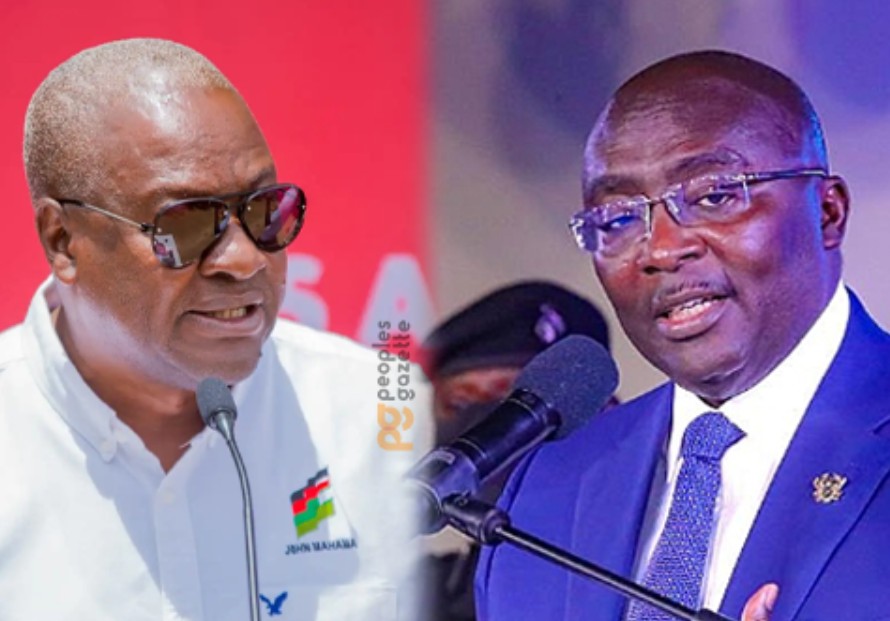
- The leader of the New Patriotic Party (NPP) for the 2028 election, Dr. Mahamudu Bawumia, has publicly requested that President John Dramani Mahama delay signing the recently enacted Public Tribunals Bill of 2026. Instead, the former Vice-President advised the executive head to pause the process to allow for comprehensive national dialogue.
Dr. Bawumia emphasized that the statutory changes deeply impact Ghana’s legal framework, judicial autonomy, and democratic pillars. He argued that structural transformations of this magnitude require broad public agreement rather than just a dominant vote in parliament.
”I am making a respectful plea to President Mahama to pause and allow open national discourse before putting pen to paper,” Dr. Bawumia remarked.
Core Objections Raised against the Bill
According to the opposition leader, the legislation was pushed through parliament prematurely last week by bypassing standard procedural delays, despite pushback from both minority lawmakers and organized labor.
Labor Opposition: The Trades Union Congress (TUC), representing millions of local workers, demanded a total withdrawal of the legislation, warning that the framework could easily be weaponized to compromise fair justice.
Ignored Advisory Reports: A Constitution Review Committee established by President Mahama delivered an unpublished report last December recommending the complete elimination of regional tribunals, noting that the High Court smoothly manages the nation’s caseload. Parliament’s sudden move directly contradicts those expert findings.
Judicial Concerns: Introducing panels that feature individuals without formal legal training to oversee criminal proceedings risks reviving public trauma linked to flawed historical tribunal systems.
Dr. Bawumia noted that while the current administration commands a historic parliamentary majority, legislative power must be managed carefully. He recommended that President Mahama utilize Articles 90 and 106 of the 1992 Constitution to involve the Council of State in organizing a neutral consultation process with civil groups, political organizations, and the Ghana Bar Association.
Context and Legislative History
Parliament finalized the Public Tribunals Bill, 2026, during an early morning session on Friday by fast-tracking the final voting phases on the same day. State officials defend the framework, stating it is designed to increase judicial access, minimize extensive court backlogs, and streamline legal operations. The policy will only become official law once it receives executive confirmation.
The legislative process triggered intense debate. Minority members walked out of the chamber to protest the bill, asserting that it builds an extrajudicial network outside constitutional boundaries and pointing out the dangers of allowing non-lawyers to rule on criminal issues.
Conversely, the state legal team, led by Attorney-General and Minister for Justice Dr. Dominic Ayine, dismissed these criticisms. The ministry maintains that the modern tribunal system strictly aligns with the constitution, functions with robust built-in protections, and serves purely to assist standard courts without repeating historical judicial errors.